In German server hosting environments, achieving high availability and cost control through hybrid architecture is a core concern for both operations and architecture teams. This article will focus on the definition of hybrid architecture, the advantages of deploying in Germany, key design points, and practical recommendations to help decision-makers strike a balance between compliance and performance.
Hybrid architecture typically refers to combining on-premises data centers, colocation services, and public cloud on demand to achieve a balance between flexibility and cost. Applicable scenarios include businesses requiring low-latency local access, regulatory data residency, and handling sudden traffic spikes. Before choosing a hybrid architecture, you should assess workload characteristics and long-term cost structures.
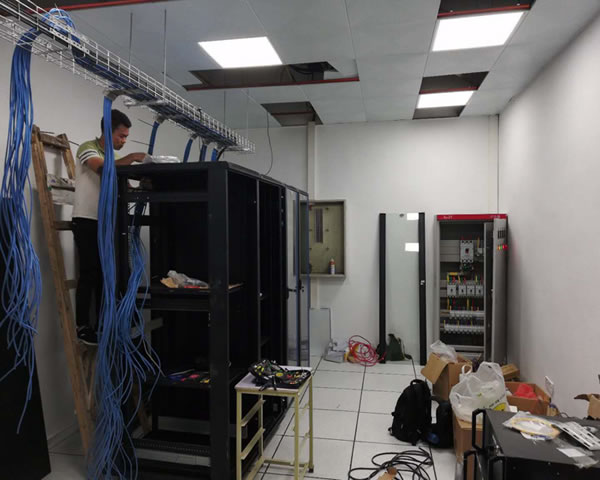
Germany boasts stable power and network infrastructure, strict data protection regulations, and geographical advantages. For services aimed at EU users, German hosting can reduce cross-border latency and meet data sovereignty requirements, providing secure and compliant local node options for hybrid architectures.
Achieving high availability requires starting with redundancy, containerization, and distributed storage. It is recommended to deploy multiple redundant Availability Zone instances on managed nodes in Germany, achieving seamless failover through health checks and traffic switching. At the same time, stateless services and state-external strategies are used to simplify scaling and recovery processes.
Cost control should combine capacity planning with layered resource utilization. Stable low-peak loads are placed in long-term resource pools hosted in Germany, elastic loads are placed on on-demand or public cloud resources, and automatic scaling and balancing reserved versus on-demand resource ratios are used to reduce long-term expenses and avoid resource waste.
In German server hosting environment, network design directly affects user experience. It is recommended to adopt dedicated lines or hybrid connection schemes to ensure critical link stability, employ edge caching and content delivery strategies to reduce cross-border requests, and continuously optimize routing strategies through traffic measurement.
By integrating geoDNS, intelligent load balancing, and application layer traffic strategies, requests can be reasonably allocated to German hosted nodes and cloud backups, achieving a dynamic balance between performance and cost. Regularly review allocation strategies to respond to business changes.
Compliance requirements in Germany and the European Union impose clear restrictions on data storage and transmission. In hybrid architectures, it is important to clarify which data must reside locally and which can be migrated to the cloud, and to ensure compliance and traceability through encryption, access control, and auditing mechanisms.
High availability and low cost rely on comprehensive monitoring and automation. It is recommended to deploy a unified monitoring, alerting, and logging platform at a managed node in Germany, combined with automated deployment and self-healing strategies to reduce manual intervention time and improve fault response efficiency.
Develop a clear RTO/RPO strategy to replicate critical data and services in a layered manner between German hosting and offsite backup. Regular drills are conducted to validate the switching process while maintaining the availability and cost control of disaster recovery resources, avoiding prolonged idleness.
It is recommended to proceed in stages: first assess business and compliance requirements, design hybrid topologies, conduct small-scale pilots and measure performance and cost, and finally gradually switch over. Identify risk points such as single point of connection, permission management, and data consistency, and develop mitigation plans.
InGermany, a hybrid architecture is adopted for server hosting, which meets data sovereignty and low-latency requirements while achieving high availability and cost optimization through layered resource management, automated operations and maintenance, and refined cost control. It is recommended to implement phased implementation in line with business growth rhythms, continuously monitoring and adjusting structural strategies to respond to market and regulatory changes.
- Latest articles
- How Do Home Users Rate Taiwan Telecom's CN2 Broadband? Overview Of Bandwidth Availability And Service Quality
- How To Determine The Actual Effect Of Tencent Cloud Hong Kong's Forced Use Of The CN2 Route On Latency
- Case Evaluation Of The Performance Of Air Conditioning In German Rittal Data Center In Edge Data Centers And Large Data Centers
- Hengchuang Technology Malaysia Cloud Server Performance Evaluation And Analysis Of Localization Service Advantages
- Best Practices For Monitoring And Alert Settings To Prevent Alibaba Cloud Hong Kong Servers From Responding Unresponsively
- In-depth Analysis: Is Alibaba Cloud Hong Kong A Native IP? Bandwidth Optimization Recommendations For Cross-border E-commerce
- Recommended Types And Bandwidth Solutions For Hong Kong Server Clusters Under High-concurrency Applications
- Why Choose VPS For Cross-Border E-commerce Expansion In Korea, Japan, And Hong Kong 3 Practical Traffic Allocation And Optimization
- Key Points For Compliance And Billing Management When Purchasing SK Native IPs In Korea During Enterprise-level Operations
- Methods For Evaluating Data Center Expansion And Resilience When Choosing A Hong Kong Server Hosting Lease
- Popular tags
-

Comparison And Practical Advice Of German Server Hosting Solutions For Small And Medium-sized Businesses
compare german server hosting solutions for small and medium-sized enterprises, covering types, compliance, performance, security, scalability and migration suggestions, providing practical choices and implementation points to facilitate decision-making. -

Compare The Differences In Response Times Between International And Local German Server Hosting Providers
This article compares the differences in response times between international and local German server hosting providers. It provides professional analysis and optimization recommendations from the perspectives of geographical location, network topology, data center infrastructure, routing strategies, CDN and caching, as well as monitoring methods. It is suitable for site administrators and operations teams seeking the best performance in the German market. -

Looking At Customer Cases: Differences In The Implementation Capabilities Of German Server Hosting Providers Across Different Industries
Based on an analysis of customer cases, it examines the differences in the capabilities of German server hosting providers in industries such as finance, e-commerce, manufacturing, media, and healthcare, and offers recommendations from the perspectives of compliance, performance, operations and maintenance, and customization.